Buy hochbetten.eu ?
We are moving the project
hochbetten.eu .
Are you interested in purchasing the domain
hochbetten.eu ?
domain@kv-gmbh.de · 0541-91531010
Buy hochbetten.eu ?
What is the sample space when rolling a dice?
The sample space when rolling a dice consists of all the possible outcomes of the roll. Since a standard dice has six sides, the sample space would be {1, 2, 3, 4, 5, 6}. Each of these numbers represents a possible outcome when rolling the dice. Therefore, the sample space for rolling a dice is the set of all possible numbers that can appear on the face of the dice. **
How many dice are needed for playing dice games?
The number of dice needed for playing dice games can vary depending on the specific game being played. Some games may require only one die, while others may require multiple dice. Common dice games like Yahtzee typically require five dice, while games like Craps may require two dice. It is important to check the rules of the specific game to determine how many dice are needed to play. **

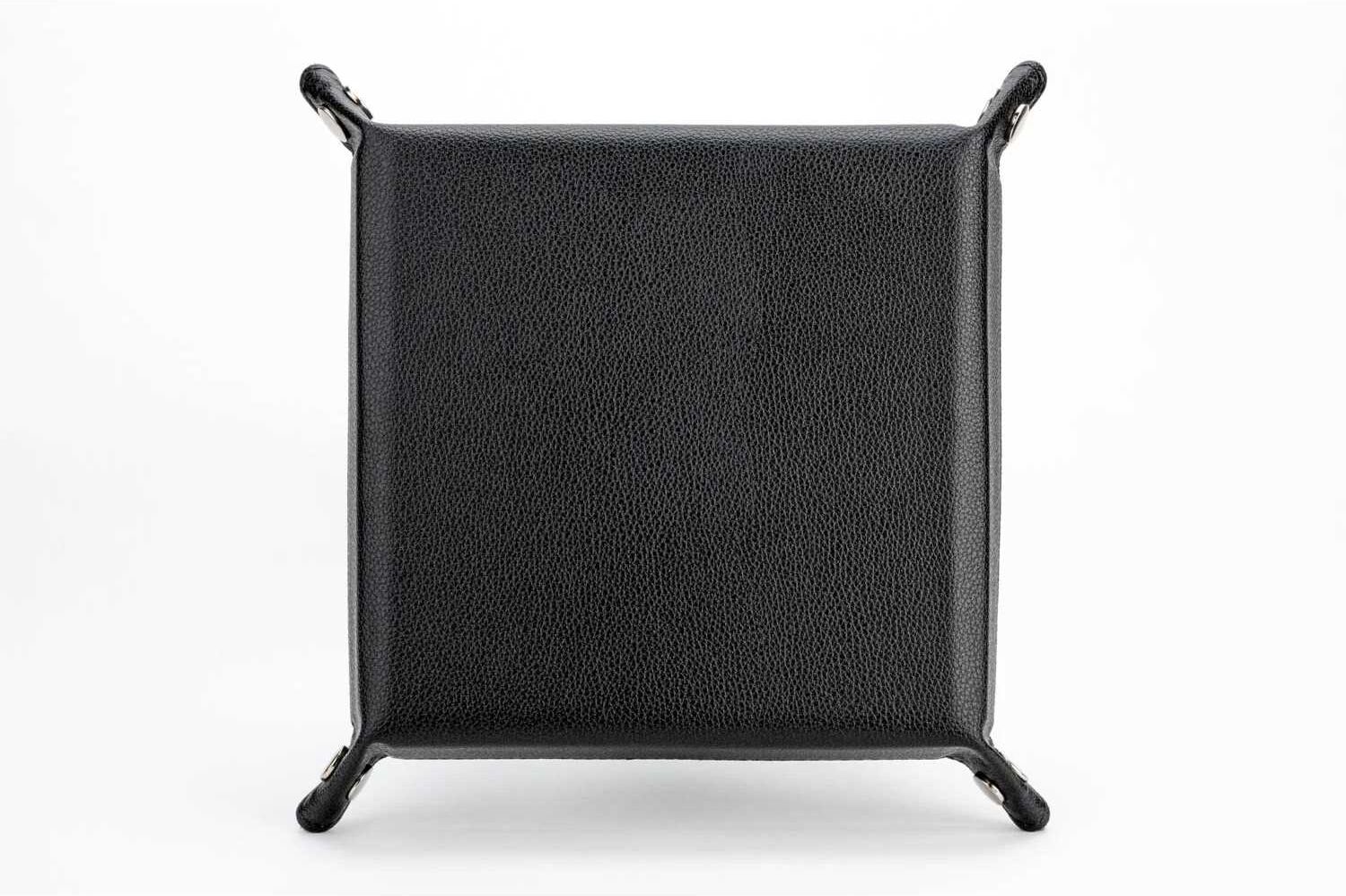
Similar search terms for HeroQuest-First-Light-Dice
Top-Angebote
Products related to HeroQuest-First-Light-Dice:
-
HeroQuest: First Light Cooperative Fantasy Board Game - 1-4 Players by Avalon HillCooperative dungeon-crawling board game for friends and family. Includes four hero miniatures, a dragon miniature, and 67 full-colour cardboard standees. 10 quests to complete with varied environments and optional custom adventures.36,60 £*Shipping: 3,95 £Secure redirect to the provider
-
Inspire Picks DND Dice Tray & Polyhedral Dice Storage Box light GreyKeep your tabletop gaming essentials organized and ready to roll with this versatile DND dice tray. Designed for compatible polyhedral dice sets used in Dungeons & Dragons and other tabletop RPGs, it combines a dedicated rolling surface with...82,24 $*Shipping: 0,00 $Secure redirect to the provider


-
How many dice are there in a dice combination?
A dice combination typically consists of two dice. Each die has six sides, so when two dice are rolled together, there are a total of 36 possible combinations (6 sides on the first die multiplied by 6 sides on the second die). These combinations range from 2 (1 on both dice) to 12 (6 on both dice). **
-
Which dice are there?
There are many different types of dice, including six-sided dice (standard dice), four-sided dice (pyramid dice), eight-sided dice (octahedron dice), ten-sided dice (pentagonal trapezohedron dice), twelve-sided dice (dodecahedron dice), and twenty-sided dice (icosahedron dice), among others. Each type of dice is commonly used in various games and activities. **
-
Doesn't God play dice?
The question "Doesn't God play dice?" is a reference to a famous quote by physicist Albert Einstein expressing his skepticism about the role of chance in the universe. Einstein believed in a deterministic view of the universe, where everything follows a set of laws and principles. However, in the field of quantum mechanics, randomness and probability play a significant role in describing the behavior of particles at the smallest scales. So, while some may argue that God does not play dice with the universe, others believe that uncertainty and probability are inherent aspects of the natural world. **
-
Can I influence dice?
No, you cannot influence the outcome of a fair dice roll. The outcome of a dice roll is determined by the laws of physics and probability, and is not influenced by any external factors such as how the dice are thrown or any rituals performed. Each roll of the dice is independent of the previous roll and is purely random. **


What is the probability of throwing two dice when rolling two dice?
When rolling two dice, there are a total of 36 possible outcomes (6 sides on the first die multiplied by 6 sides on the second die). To find the probability of a specific outcome, we can divide the number of favorable outcomes by the total number of outcomes. For example, the probability of rolling a 7 (which can be achieved with a 1 and 6, 2 and 5, 3 and 4, 4 and 3, 5 and 2, or 6 and 1) is 6/36 or 1/6. Similarly, the probability of rolling a 2 is 1/36, as it can only be achieved with a 1 and 1. **
Who first calculated the speed of light?
The speed of light was first calculated by the Danish astronomer Ole Rømer in 1676. Rømer made his calculations based on observations of the moons of Jupiter. He noticed that the time it took for the moons to orbit Jupiter varied depending on the distance between Earth and Jupiter, leading him to estimate the speed of light to be about 225,000 kilometers per second. **
Top-Angebote
Products related to HeroQuest-First-Light-Dice:
-
Metallic Dice Games HeroQuest First Light Dice Tray - FanRoll - NEW - 25 × 25 × 1.6 cmCompact dice tray officially licensed for the HeroQuest universe. Low-profile design fits most gaming tables. Made of sturdy material. Approximate dimensions 25 × 25 × 1.6 cm. Weight approximately 200 g. Suitable for tabletop gaming sessions.15,79 £*Shipping: 3,95 £Secure redirect to the provider
-
HeroQuest: First Light Cooperative Fantasy Board Game - 1-4 Players by Avalon HillCooperative dungeon-crawling board game for friends and family. Includes four hero miniatures, a dragon miniature, and 67 full-colour cardboard standees. 10 quests to complete with varied environments and optional custom adventures.36,60 £*Shipping: 3,95 £Secure redirect to the provider
-
What is the sample space when rolling a dice?
The sample space when rolling a dice consists of all the possible outcomes of the roll. Since a standard dice has six sides, the sample space would be {1, 2, 3, 4, 5, 6}. Each of these numbers represents a possible outcome when rolling the dice. Therefore, the sample space for rolling a dice is the set of all possible numbers that can appear on the face of the dice. **
-
How many dice are needed for playing dice games?
The number of dice needed for playing dice games can vary depending on the specific game being played. Some games may require only one die, while others may require multiple dice. Common dice games like Yahtzee typically require five dice, while games like Craps may require two dice. It is important to check the rules of the specific game to determine how many dice are needed to play. **
-
How many dice are there in a dice combination?
A dice combination typically consists of two dice. Each die has six sides, so when two dice are rolled together, there are a total of 36 possible combinations (6 sides on the first die multiplied by 6 sides on the second die). These combinations range from 2 (1 on both dice) to 12 (6 on both dice). **
-
Which dice are there?
There are many different types of dice, including six-sided dice (standard dice), four-sided dice (pyramid dice), eight-sided dice (octahedron dice), ten-sided dice (pentagonal trapezohedron dice), twelve-sided dice (dodecahedron dice), and twenty-sided dice (icosahedron dice), among others. Each type of dice is commonly used in various games and activities. **
Similar search terms for HeroQuest-First-Light-Dice
-
Inspire Picks DND Dice Tray & Polyhedral Dice Storage Box light GreyKeep your tabletop gaming essentials organized and ready to roll with this versatile DND dice tray. Designed for compatible polyhedral dice sets used in Dungeons & Dragons and other tabletop RPGs, it combines a dedicated rolling surface with...82,24 $*Shipping: 0,00 $Secure redirect to the provider
-
007 First Light (PS5), Used - Good.gadcet-pdp{--g-green:#00a651;color:#1f2430;line-height:1.55;font-size:inherit;max-width:760px}.gadcet-pdp>*:first-child{margin-top:0}.gadcet-pdp p{margin:0 0.9em}.gadcet-pdp h3{font-size:1.05em;font-weight:600;color:#11161f;margin:1.4em 0.5em;padding-left:.5em;border-left:3px solid var(--g-green);border-radius:0;line-height:1.3}.gadcet-pdp ul{list-style:none!important;margin:0 0.9em;padding:0!important}.gadcet-pdp ul li{position:relative;padding:.1em 0.1em 1.5em;margin:0}.gadcet-pdp ul li::before{content:"";position:absolute;left:.16em;top:.45em;width:.36em;height:.66em;border:solid var(--g-green);border-width:0.14em.14em 0;transform:rotate(45deg)}.gadcet-pdp table{width:100%;border-collapse:collapse;margin:.3em 0 1em;font-size:.95em;border:1px solid #e7e9ee!important;border-radius:8px;overflow:hidden}.gadcet-pdp table td{padding:.5em.8em;border-bottom:1px solid #eef0f4!important;vertical-align:top}.gadcet-pdp table tr:last-child td{border-bottom:0!important}.gadcet-pdp table tr:nth-child(even){background:#f7f9f8}.gadcet-pdp table td:first-child{font-weight:600;color:#454c59;width:40%}@media (max-width:600px){.gadcet-pdp table td:first-child{width:42%}} Step into the world of international espionage with 007 First Light for PlayStation 5 — an original James Bond origin story from IO Interactive, the studio behind the acclaimed HITMAN series. Combining cinematic storytelling, stealth gameplay and high-tech spy gadgets, this action-adventure delivers a fresh take on the world's most famous secret agent. Key Features Original James Bond origin story following a young agent's journey to becoming 007 Developed and published by IO Interactive, creators of the HITMAN games Action-adventure gameplay blending stealth, tactical combat and espionage missions High-tech spy gadgets and specialist equipment to overcome obstacles Choose your approach — stealth, strategy or direct action Immersive third-person, single-player story campaign Explore international locations inspired by the glamorous and dangerous world of intelligence Designed for PS5 with detailed environments and cinematic presentation Benefits Experience Bond's evolution from talented young operative to legendary 007 Story-driven gameplay perfect for fans of stealth and cinematic action Available new or as a used copy in good condition for extra value A great gift idea for James Bond fans and PS5 owners Specifications Title 007 First Light Platform PlayStation 5 (PS5) Developer IO Interactive Publisher IO Interactive Genre Action Adventure / Stealth / Espionage Game Mode Single Player Format PS5 Game What You'll Receive 007 First Light PS5 game in your chosen condition — New or Used - Good Ideal For Perfect for PS5 gamers who enjoy stealth, tactical combat and story-driven spy adventures, as well as James Bond enthusiasts and collectors looking for the next iconic 007 experience.47,89 £*Shipping: 0,00 £Secure redirect to the provider
-
Doesn't God play dice?
The question "Doesn't God play dice?" is a reference to a famous quote by physicist Albert Einstein expressing his skepticism about the role of chance in the universe. Einstein believed in a deterministic view of the universe, where everything follows a set of laws and principles. However, in the field of quantum mechanics, randomness and probability play a significant role in describing the behavior of particles at the smallest scales. So, while some may argue that God does not play dice with the universe, others believe that uncertainty and probability are inherent aspects of the natural world. **
-
Can I influence dice?
No, you cannot influence the outcome of a fair dice roll. The outcome of a dice roll is determined by the laws of physics and probability, and is not influenced by any external factors such as how the dice are thrown or any rituals performed. Each roll of the dice is independent of the previous roll and is purely random. **
-
What is the probability of throwing two dice when rolling two dice?
When rolling two dice, there are a total of 36 possible outcomes (6 sides on the first die multiplied by 6 sides on the second die). To find the probability of a specific outcome, we can divide the number of favorable outcomes by the total number of outcomes. For example, the probability of rolling a 7 (which can be achieved with a 1 and 6, 2 and 5, 3 and 4, 4 and 3, 5 and 2, or 6 and 1) is 6/36 or 1/6. Similarly, the probability of rolling a 2 is 1/36, as it can only be achieved with a 1 and 1. **
-
Who first calculated the speed of light?
The speed of light was first calculated by the Danish astronomer Ole Rømer in 1676. Rømer made his calculations based on observations of the moons of Jupiter. He noticed that the time it took for the moons to orbit Jupiter varied depending on the distance between Earth and Jupiter, leading him to estimate the speed of light to be about 225,000 kilometers per second. **
* All prices are inclusive of VAT and, if applicable, plus shipping costs. The offer information is based on the details provided by the respective shop and is updated through automated processes. Real-time updates do not occur, so deviations can occur in individual cases. ** Note: Parts of this content were created by AI.