Buy hochbetten.eu ?
We are moving the project
hochbetten.eu .
Are you interested in purchasing the domain
hochbetten.eu ?
domain@kv-gmbh.de · 0541-91531010
Buy hochbetten.eu ?
How do you calculate the space diagonal and the face diagonal?
To calculate the space diagonal of a rectangular prism, you can use the formula: √(length^2 + width^2 + height^2). This formula represents the square root of the sum of the squares of the length, width, and height of the prism. To calculate the face diagonal of a rectangular prism, you can use the formula: √(length^2 + width^2) or √(length^2 + height^2) or √(width^2 + height^2). These formulas represent the square root of the sum of the squares of the two dimensions of the face. **
How do you calculate the surface diagonal and the space diagonal of a cuboid?
To calculate the surface diagonal of a cuboid, you can use the Pythagorean theorem, which states that the square of the hypotenuse of a right-angled triangle is equal to the sum of the squares of the other two sides. So, for a cuboid, you would use the formula: √(length^2 + width^2 + height^2). To calculate the space diagonal of a cuboid, you can also use the Pythagorean theorem, but in this case, you would be finding the diagonal that goes from one corner of the cuboid to the opposite corner through the space inside the cuboid. The formula for the space diagonal is: √(length^2 + width^2 + height^2). **


Similar search terms for Diagonal
Top-Angebote
Products related to Diagonal:
-
Uplift Essentials Micro Diagonal Flush Wire Cutters Micro Diagonal Flush Wire CuttersAchieve clean, razorsharp cuts in tight spaces with these micro diagonal flush wire cutters. Precisionengineered with highcarbon steel jaws and an angled 21degree cutting head, these lightweight side nippers slice through soft metal wires, plastic...30,97 $*Shipping: 0,00 $Secure redirect to the provider
-
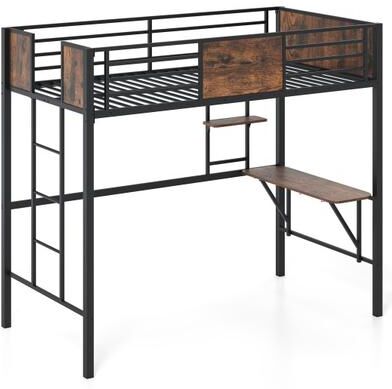
Isabelle & Max Metal Bunk Bed,Space Saving Bed Frame BlackStable load-bearing capacity, safe and secureAdopting a thickened steel pipe frame and reinforced bed support structure, the upper bunk can bear up to 200kg of weight, and the lower bunk can bear up to 250kg of weight. There are raised guardrails around to prevent falling during sleep, and the ladder is designed with anti slip pedals for safer access to and from the bed. Brand Name: Isabelle & Max.309,99 £*Shipping: 0,00 £Secure redirect to the provider
-
Rare Purchases Multi Functional Caulking Tools Set, Space Saving And Convenient To Use Multi Functional Caulking Tools Set, Space Saving And Convenient To UseUpgrade your home improvement toolkit with this 4 pc set of caulking tools, specifically designed to make your sealing projects quicker, cleaner, and more efficient. This multifunctional tool set is the ultimate solution for anyone looking to...49,97 $*Shipping: 0,00 $Secure redirect to the provider
-
Snug & Styled WLXY XYA05 Electronic Diagonal Pliers Precision Wire Cutting Pliers For Repair & Crafts 5 Inch DiagonalTackle delicate cutting tasks with confidence using our electronic diagonal pliers, designed for clean, accurate results every time. Crafted from durable CRV steel, this compact wire cutting pliers tool is ideal for electronics technicians,...39,97 $*Shipping: 0,00 $Secure redirect to the provider




-
How do you calculate the space diagonal?
To calculate the space diagonal of a rectangular prism, you can use the formula: √(length² + width² + height²). This formula involves taking the square root of the sum of the squares of the length, width, and height of the rectangular prism. By applying this formula, you can find the length of the space diagonal, which is the diagonal that runs from one corner of the rectangular prism to the opposite corner through the interior space. **
-
What is the angle of the space diagonal?
The angle of the space diagonal in a cube is 70.53 degrees. This angle is formed between the space diagonal and any of the cube's faces. It can be calculated using trigonometry and the Pythagorean theorem. The space diagonal connects two opposite corners of the cube and passes through the center of the cube. **
-
How do you calculate the space diagonal in math?
To calculate the space diagonal of a rectangular prism, you can use the Pythagorean theorem. The space diagonal is the longest diagonal that runs from one corner of the rectangular prism to the opposite corner. To find the space diagonal, you need to know the length, width, and height of the rectangular prism. By using the Pythagorean theorem, you can square each side, add the squares together, and then take the square root of the sum to find the space diagonal. **
-
What is the definition of space and surface diagonal?
The space diagonal of a three-dimensional shape, such as a cube or rectangular prism, is the line segment that connects two non-adjacent vertices of the shape. It represents the longest possible distance between two points within the shape. The surface diagonal, on the other hand, refers to the diagonal of a face or surface of the shape. It is the line segment that connects two opposite corners of a face, and it lies entirely within that face. Both the space diagonal and surface diagonal are important measurements in geometry and can be used to calculate various properties of three-dimensional shapes. **
What is the Pythagorean theorem for the space diagonal?
The Pythagorean theorem for the space diagonal of a rectangular prism states that the square of the length of the space diagonal is equal to the sum of the squares of the lengths of the three sides. In mathematical terms, if a, b, and c are the lengths of the three sides of the rectangular prism, and d is the length of the space diagonal, then the theorem can be expressed as: d^2 = a^2 + b^2 + c^2. This theorem can be used to calculate the length of the space diagonal when the lengths of the three sides are known. **
What is given when the space diagonal is given?
When the space diagonal is given, the length of the three sides of the rectangular prism can be determined using the Pythagorean theorem. The space diagonal, the length, width, and height of the rectangular prism form a right-angled triangle, and the Pythagorean theorem can be used to find the lengths of the sides. This information is useful for calculating the volume, surface area, and other properties of the rectangular prism. **
Top-Angebote
Products related to Diagonal:
-
Uplift Essentials Multifunctional Universal Diagonal Pliers 8in DiagonalEngineered for the demands of the modern job site, these Multifunctional Universal Diagonal Pliers are a staple for any professional electrician. These wire cutters are forged from highdensity alloy steel, providing a razorsharp cutting edge that...56,97 $*Shipping: 0,00 $Secure redirect to the provider
-
Uplift Essentials Micro Diagonal Flush Wire Cutters Micro Diagonal Flush Wire CuttersAchieve clean, razorsharp cuts in tight spaces with these micro diagonal flush wire cutters. Precisionengineered with highcarbon steel jaws and an angled 21degree cutting head, these lightweight side nippers slice through soft metal wires, plastic...30,97 $*Shipping: 0,00 $Secure redirect to the provider
-
Isabelle & Max Metal Bunk Bed,Space Saving Bed Frame BlackStable load-bearing capacity, safe and secureAdopting a thickened steel pipe frame and reinforced bed support structure, the upper bunk can bear up to 200kg of weight, and the lower bunk can bear up to 250kg of weight. There are raised guardrails around to prevent falling during sleep, and the ladder is designed with anti slip pedals for safer access to and from the bed. Brand Name: Isabelle & Max.309,99 £*Shipping: 0,00 £Secure redirect to the provider
-
How do you calculate the space diagonal and the face diagonal?
To calculate the space diagonal of a rectangular prism, you can use the formula: √(length^2 + width^2 + height^2). This formula represents the square root of the sum of the squares of the length, width, and height of the prism. To calculate the face diagonal of a rectangular prism, you can use the formula: √(length^2 + width^2) or √(length^2 + height^2) or √(width^2 + height^2). These formulas represent the square root of the sum of the squares of the two dimensions of the face. **
-
How do you calculate the surface diagonal and the space diagonal of a cuboid?
To calculate the surface diagonal of a cuboid, you can use the Pythagorean theorem, which states that the square of the hypotenuse of a right-angled triangle is equal to the sum of the squares of the other two sides. So, for a cuboid, you would use the formula: √(length^2 + width^2 + height^2). To calculate the space diagonal of a cuboid, you can also use the Pythagorean theorem, but in this case, you would be finding the diagonal that goes from one corner of the cuboid to the opposite corner through the space inside the cuboid. The formula for the space diagonal is: √(length^2 + width^2 + height^2). **
-
How do you calculate the space diagonal?
To calculate the space diagonal of a rectangular prism, you can use the formula: √(length² + width² + height²). This formula involves taking the square root of the sum of the squares of the length, width, and height of the rectangular prism. By applying this formula, you can find the length of the space diagonal, which is the diagonal that runs from one corner of the rectangular prism to the opposite corner through the interior space. **
-
What is the angle of the space diagonal?
The angle of the space diagonal in a cube is 70.53 degrees. This angle is formed between the space diagonal and any of the cube's faces. It can be calculated using trigonometry and the Pythagorean theorem. The space diagonal connects two opposite corners of the cube and passes through the center of the cube. **
Similar search terms for Diagonal
-
Rare Purchases Multi Functional Caulking Tools Set, Space Saving And Convenient To Use Multi Functional Caulking Tools Set, Space Saving And Convenient To UseUpgrade your home improvement toolkit with this 4 pc set of caulking tools, specifically designed to make your sealing projects quicker, cleaner, and more efficient. This multifunctional tool set is the ultimate solution for anyone looking to...49,97 $*Shipping: 0,00 $Secure redirect to the provider
-
Snug & Styled WLXY XYA05 Electronic Diagonal Pliers Precision Wire Cutting Pliers For Repair & Crafts 5 Inch DiagonalTackle delicate cutting tasks with confidence using our electronic diagonal pliers, designed for clean, accurate results every time. Crafted from durable CRV steel, this compact wire cutting pliers tool is ideal for electronics technicians,...39,97 $*Shipping: 0,00 $Secure redirect to the provider
-
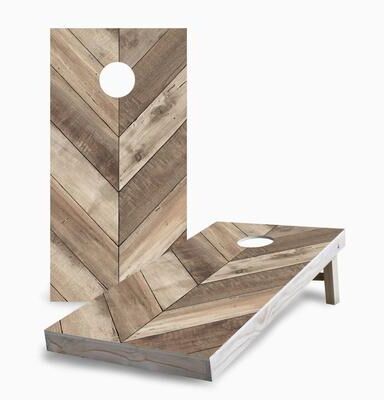
Skip's Garage Diagonal Wood Plank Cornhole Boards"Includes: (2) Cornhole Boards & (8) Bags. Boards are Regulation Sized 24"" Wide x 48"" Long. Bags Will Complement The Board Colors. Easily Message Us Bag Color Requests. Easily Add a Carry Cases, Lights, or Both!"246,49 $*Shipping: 0,00 $Secure redirect to the provider
-
How do you calculate the space diagonal in math?
To calculate the space diagonal of a rectangular prism, you can use the Pythagorean theorem. The space diagonal is the longest diagonal that runs from one corner of the rectangular prism to the opposite corner. To find the space diagonal, you need to know the length, width, and height of the rectangular prism. By using the Pythagorean theorem, you can square each side, add the squares together, and then take the square root of the sum to find the space diagonal. **
-
What is the definition of space and surface diagonal?
The space diagonal of a three-dimensional shape, such as a cube or rectangular prism, is the line segment that connects two non-adjacent vertices of the shape. It represents the longest possible distance between two points within the shape. The surface diagonal, on the other hand, refers to the diagonal of a face or surface of the shape. It is the line segment that connects two opposite corners of a face, and it lies entirely within that face. Both the space diagonal and surface diagonal are important measurements in geometry and can be used to calculate various properties of three-dimensional shapes. **
-
What is the Pythagorean theorem for the space diagonal?
The Pythagorean theorem for the space diagonal of a rectangular prism states that the square of the length of the space diagonal is equal to the sum of the squares of the lengths of the three sides. In mathematical terms, if a, b, and c are the lengths of the three sides of the rectangular prism, and d is the length of the space diagonal, then the theorem can be expressed as: d^2 = a^2 + b^2 + c^2. This theorem can be used to calculate the length of the space diagonal when the lengths of the three sides are known. **
-
What is given when the space diagonal is given?
When the space diagonal is given, the length of the three sides of the rectangular prism can be determined using the Pythagorean theorem. The space diagonal, the length, width, and height of the rectangular prism form a right-angled triangle, and the Pythagorean theorem can be used to find the lengths of the sides. This information is useful for calculating the volume, surface area, and other properties of the rectangular prism. **
* All prices are inclusive of VAT and, if applicable, plus shipping costs. The offer information is based on the details provided by the respective shop and is updated through automated processes. Real-time updates do not occur, so deviations can occur in individual cases. ** Note: Parts of this content were created by AI.