Buy hochbetten.eu ?
We are moving the project
hochbetten.eu .
Are you interested in purchasing the domain
hochbetten.eu ?
domain@kv-gmbh.de · 0541-91531010
Buy hochbetten.eu ?
How do you calculate the braking distance, the braking process, and the braking deceleration?
The braking distance can be calculated using the formula: braking distance = (initial velocity^2) / (2 * deceleration), where the deceleration is the rate at which the vehicle slows down. The braking process involves the driver applying the brakes, which causes friction between the brake pads and the wheels, leading to a decrease in the vehicle's speed. The braking deceleration can be calculated by dividing the change in velocity by the time it takes for the vehicle to come to a complete stop. **
How do you calculate the braking distance in space?
In space, the braking distance can be calculated using the formula: braking distance = (initial velocity^2) / (2 * deceleration). First, the initial velocity of the object in space needs to be determined. Then, the deceleration rate of the object must be known. By plugging these values into the formula, the braking distance in space can be calculated. This calculation is crucial for spacecraft and satellites to ensure they can safely slow down or come to a stop at their intended destination. **


Similar search terms for Braking
Top-Angebote
Products related to Braking:
-
Drop Dash Deals Heavy Duty Wall Mounted Loft Ladder For RV Bunks Attics And Space Saving Access Heavy Duty Wall Mounted Loft Ladder For RV Bunks Attics And Space Saving AccessCreate safer and easier access to elevated spaces with this 2 pc of wall mounted ladder designed for modern homes, RVs, lofts, and bunk setups. Built from durable metal, it offers dependable stability while helping you maximize vertical space...159,97 $*Shipping: 0,00 $Secure redirect to the provider
-
Perfect Picks Market Black Adjustable Bathroom Wrench Space Saving & Multi Functional blackLooking for an easy solution to save space and enhance your bathroom tools The Black Adjustable Bathroom Wrench is the perfect fit for those who want efficiency and convenience in one. With an adjustable range from 1668mm, this spacesaving tool is...39,97 $*Shipping: 0,00 $Secure redirect to the provider
-
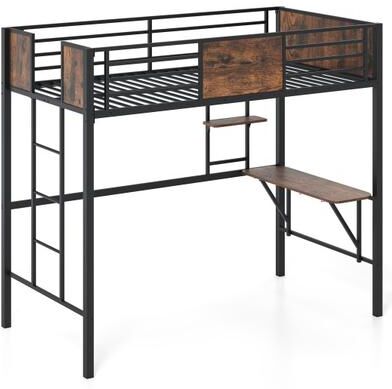
Isabelle & Max Single(3') Bunk Bed, Single Over Single Loft Bed Frame With Ladder And Safety Guardrail, Home Bedroom Dormitory Space-Saving Twin High Sleeper Beds BlackThis minimalist yet modern bunk bed is a modern classic, featuring a streamlined steel frame and a striking finish. The bunk bed's reliable support structure is durable and quality-tested to eliminate rocking while enhancing stability and durability for a restful night's sleep. Brand Name: Isabelle & Max.179,99 £*Shipping: 19,99 £Secure redirect to the provider


-
How do you calculate the braking time and braking distance?
Braking time and braking distance can be calculated using the formula: Braking distance = (initial velocity^2) / (2 * deceleration) Where initial velocity is the speed of the vehicle before braking, and deceleration is the rate at which the vehicle slows down. Braking time can be calculated by dividing the braking distance by the initial velocity. These calculations are based on the assumption of constant deceleration, and may vary depending on factors such as road conditions and the vehicle's braking system. **
-
What are the differences between braking to walking speed and braking?
Braking to walking speed typically involves gradually reducing speed until coming to a complete stop, whereas braking refers to the act of slowing down a moving vehicle. When braking to walking speed, the goal is to smoothly decelerate without any sudden stops, while braking may involve more forceful actions to slow down quickly. Additionally, braking to walking speed is often used in situations where a vehicle needs to stop at a precise location, such as at a crosswalk or intersection. **
-
How do you calculate braking time and braking distance in physics?
In physics, braking time and braking distance can be calculated using the equations of motion and the principles of kinematics. The braking time can be calculated using the equation t = v/u, where t is the braking time, v is the final velocity, and u is the initial velocity. The braking distance can be calculated using the equation d = (v^2 - u^2) / (2a), where d is the braking distance and a is the deceleration. These equations take into account the initial and final velocities, as well as the deceleration of the object to determine the braking time and distance. **
-
Is braking a reflex?
Braking can be considered a reflex in certain situations. When a driver reacts to a sudden obstacle or hazard on the road by immediately pressing the brake pedal, it can be seen as a reflexive action. This is because the response is automatic and occurs without conscious thought. However, braking can also be a learned behavior, as drivers are trained to use their brakes in specific situations through practice and experience. Therefore, while braking can be a reflex in some cases, it can also be a learned and intentional action. **


What is the difference between a full braking and an emergency braking?
Full braking refers to applying the brakes with maximum force in a controlled manner to slow down or stop the vehicle. This can be done in response to normal traffic conditions or when approaching a stop sign or traffic light. On the other hand, emergency braking is a sudden and forceful application of the brakes in response to an unexpected hazard or danger, such as a pedestrian stepping into the road or a vehicle suddenly stopping in front. Emergency braking is typically done to avoid a collision and requires quick reflexes and a strong, immediate response from the driver. **
What is the formula for braking acceleration and braking time in physics?
The formula for braking acceleration is given by \( a = \frac{v_f - v_i}{t} \), where \( a \) is the braking acceleration, \( v_f \) is the final velocity, \( v_i \) is the initial velocity, and \( t \) is the time taken to come to a stop. The formula for braking time can be calculated using the equation \( t = \frac{v_f - v_i}{a} \), where \( t \) is the braking time. These formulas are used to calculate the rate at which an object slows down when braking. **
Top-Angebote
Products related to Braking:
-
Isabelle & Max Metal Bunk Bed,Space Saving Bed Frame BlackStable load-bearing capacity, safe and secureAdopting a thickened steel pipe frame and reinforced bed support structure, the upper bunk can bear up to 200kg of weight, and the lower bunk can bear up to 250kg of weight. There are raised guardrails around to prevent falling during sleep, and the ladder is designed with anti slip pedals for safer access to and from the bed. Brand Name: Isabelle & Max.309,99 £*Shipping: 0,00 £Secure redirect to the provider
-
Rare Purchases Multi Functional Caulking Tools Set, Space Saving And Convenient To Use Multi Functional Caulking Tools Set, Space Saving And Convenient To UseUpgrade your home improvement toolkit with this 4 pc set of caulking tools, specifically designed to make your sealing projects quicker, cleaner, and more efficient. This multifunctional tool set is the ultimate solution for anyone looking to...49,97 $*Shipping: 0,00 $Secure redirect to the provider
-
Drop Dash Deals Heavy Duty Wall Mounted Loft Ladder For RV Bunks Attics And Space Saving Access Heavy Duty Wall Mounted Loft Ladder For RV Bunks Attics And Space Saving AccessCreate safer and easier access to elevated spaces with this 2 pc of wall mounted ladder designed for modern homes, RVs, lofts, and bunk setups. Built from durable metal, it offers dependable stability while helping you maximize vertical space...159,97 $*Shipping: 0,00 $Secure redirect to the provider
-
How do you calculate the braking distance, the braking process, and the braking deceleration?
The braking distance can be calculated using the formula: braking distance = (initial velocity^2) / (2 * deceleration), where the deceleration is the rate at which the vehicle slows down. The braking process involves the driver applying the brakes, which causes friction between the brake pads and the wheels, leading to a decrease in the vehicle's speed. The braking deceleration can be calculated by dividing the change in velocity by the time it takes for the vehicle to come to a complete stop. **
-
How do you calculate the braking distance in space?
In space, the braking distance can be calculated using the formula: braking distance = (initial velocity^2) / (2 * deceleration). First, the initial velocity of the object in space needs to be determined. Then, the deceleration rate of the object must be known. By plugging these values into the formula, the braking distance in space can be calculated. This calculation is crucial for spacecraft and satellites to ensure they can safely slow down or come to a stop at their intended destination. **
-
How do you calculate the braking time and braking distance?
Braking time and braking distance can be calculated using the formula: Braking distance = (initial velocity^2) / (2 * deceleration) Where initial velocity is the speed of the vehicle before braking, and deceleration is the rate at which the vehicle slows down. Braking time can be calculated by dividing the braking distance by the initial velocity. These calculations are based on the assumption of constant deceleration, and may vary depending on factors such as road conditions and the vehicle's braking system. **
-
What are the differences between braking to walking speed and braking?
Braking to walking speed typically involves gradually reducing speed until coming to a complete stop, whereas braking refers to the act of slowing down a moving vehicle. When braking to walking speed, the goal is to smoothly decelerate without any sudden stops, while braking may involve more forceful actions to slow down quickly. Additionally, braking to walking speed is often used in situations where a vehicle needs to stop at a precise location, such as at a crosswalk or intersection. **
Similar search terms for Braking
-
Perfect Picks Market Black Adjustable Bathroom Wrench Space Saving & Multi Functional blackLooking for an easy solution to save space and enhance your bathroom tools The Black Adjustable Bathroom Wrench is the perfect fit for those who want efficiency and convenience in one. With an adjustable range from 1668mm, this spacesaving tool is...39,97 $*Shipping: 0,00 $Secure redirect to the provider
-
Isabelle & Max Single(3') Bunk Bed, Single Over Single Loft Bed Frame With Ladder And Safety Guardrail, Home Bedroom Dormitory Space-Saving Twin High Sleeper Beds BlackThis minimalist yet modern bunk bed is a modern classic, featuring a streamlined steel frame and a striking finish. The bunk bed's reliable support structure is durable and quality-tested to eliminate rocking while enhancing stability and durability for a restful night's sleep. Brand Name: Isabelle & Max.179,99 £*Shipping: 19,99 £Secure redirect to the provider
-
Kodotan sofa Twin over Full Bunk Bed, Metal Bunk Bed with Storage Shelves and Lights, Space-saving & Noise-free Design, BlackDescription Maximize both space and function with this Twin Over Full Metal Bunk Bed, designed for modern families, shared rooms, or guest spaces.569,99 $*Shipping: 0,00 $Secure redirect to the provider
-
Value Selection Ajax Steel Ladder Bookcase Space Saving Modern Vertical Bookshelf Ajax Steel Ladder Bookcase Space Saving Modern Vertical BookshelfBring comfort and convenience to every page. This natural bamboo book stand keeps cookbooks, textbooks, sheet music, and tablets comfortably positioned for handsfree use. Its five adjustable viewing angles make reading, studying, cooking, or...509,97 $*Shipping: 0,00 $Secure redirect to the provider
-
How do you calculate braking time and braking distance in physics?
In physics, braking time and braking distance can be calculated using the equations of motion and the principles of kinematics. The braking time can be calculated using the equation t = v/u, where t is the braking time, v is the final velocity, and u is the initial velocity. The braking distance can be calculated using the equation d = (v^2 - u^2) / (2a), where d is the braking distance and a is the deceleration. These equations take into account the initial and final velocities, as well as the deceleration of the object to determine the braking time and distance. **
-
Is braking a reflex?
Braking can be considered a reflex in certain situations. When a driver reacts to a sudden obstacle or hazard on the road by immediately pressing the brake pedal, it can be seen as a reflexive action. This is because the response is automatic and occurs without conscious thought. However, braking can also be a learned behavior, as drivers are trained to use their brakes in specific situations through practice and experience. Therefore, while braking can be a reflex in some cases, it can also be a learned and intentional action. **
-
What is the difference between a full braking and an emergency braking?
Full braking refers to applying the brakes with maximum force in a controlled manner to slow down or stop the vehicle. This can be done in response to normal traffic conditions or when approaching a stop sign or traffic light. On the other hand, emergency braking is a sudden and forceful application of the brakes in response to an unexpected hazard or danger, such as a pedestrian stepping into the road or a vehicle suddenly stopping in front. Emergency braking is typically done to avoid a collision and requires quick reflexes and a strong, immediate response from the driver. **
-
What is the formula for braking acceleration and braking time in physics?
The formula for braking acceleration is given by \( a = \frac{v_f - v_i}{t} \), where \( a \) is the braking acceleration, \( v_f \) is the final velocity, \( v_i \) is the initial velocity, and \( t \) is the time taken to come to a stop. The formula for braking time can be calculated using the equation \( t = \frac{v_f - v_i}{a} \), where \( t \) is the braking time. These formulas are used to calculate the rate at which an object slows down when braking. **
* All prices are inclusive of VAT and, if applicable, plus shipping costs. The offer information is based on the details provided by the respective shop and is updated through automated processes. Real-time updates do not occur, so deviations can occur in individual cases. ** Note: Parts of this content were created by AI.