Buy hochbetten.eu ?
We are moving the project
hochbetten.eu .
Are you interested in purchasing the domain
hochbetten.eu ?
domain@kv-gmbh.de · 0541-91531010
Buy hochbetten.eu ?
What are peptide bonds?
Peptide bonds are covalent bonds that link amino acids together in a protein chain. They are formed through a condensation reaction between the carboxyl group of one amino acid and the amino group of another amino acid, resulting in the release of a water molecule. Peptide bonds are crucial for maintaining the structure and function of proteins, as they determine the sequence of amino acids in a protein chain. **
What is correct: peptide bond?
A peptide bond is a covalent bond that forms between the carboxyl group of one amino acid and the amino group of another amino acid during protein synthesis. This bond is formed through a condensation reaction, where a molecule of water is removed. The resulting bond is a strong and stable linkage that holds the amino acids together in a protein chain. Therefore, the correct term is "peptide bond" to describe this specific type of covalent bond between amino acids. **


Similar search terms for Medicube-PDRN-Pink-Peptide
Top-Angebote
Products related to Medicube-PDRN-Pink-Peptide:
-
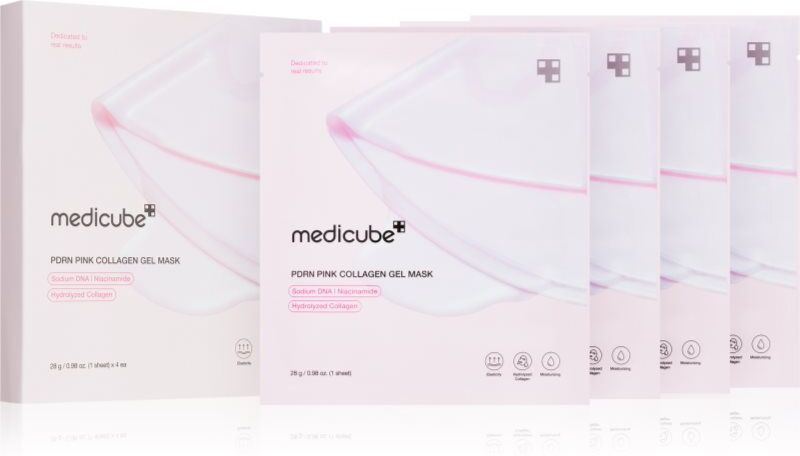
medicube PDRN Pink Collagen Gel Mask lifting and firming mask with collagen 4x28 gmedicube PDRN Pink Collagen Gel Mask, 4x28 g, Sheet masks for Women, Does it feel as though your skin isn’t quite right and needs something more than just the care provided by a cream? The medicube PDRN Pink Collagen Gel Mask face mask is the perfect product to enrich your skincare routine – it pampers the skin and delivers an intensive treatment, bringing about an instant improvement in the skin’s appearance. Characteristics: hydrates deeply and nourishes intensively helps to smooth out wrinkles and fine lines smoothes out uneven skin texture protects skin against free radicals firms the facial contours brightens and freshens regenerates the skin Ingredients: collagen – binds a large amount of water, keeping skin hydrated for a long time, and thus promotes a youthful, full and elastic appearance of skin and a reduction in the visibility of wrinkles niacinamide – promotes skin brightening, reduction of pigment spots, colour evenness and smoothing of rough texture, helps to strengthen the protective skin barrier and thus improve the level of skin hydration peptides – have hydrating, smoothing and softening effects, help reduce the visibility of wrinkles, promote skin firmness and elasticity, give a healthy, balanced and radiant appearance and strengthen the skin barrier How to use: Carefully remove the mask from the packaging and apply to a cleansed face. Leave to act for the time indicated on the packaging.13,76 £*Shipping: 3,99 £Secure redirect to the provider

-
What is a peptide bond, peptide chain, peptide group, di-, tri-, and polypeptide? Can you please explain this briefly and simply? Thank you.
A peptide bond is a chemical bond that forms between the carboxyl group of one amino acid and the amino group of another amino acid. When multiple amino acids are linked together by peptide bonds, they form a peptide chain. A peptide group refers to a group of amino acids linked together by peptide bonds. A dipeptide is a chain of two amino acids, a tripeptide has three amino acids, and a polypeptide is a chain of many amino acids linked together. These chains of amino acids are the building blocks of proteins. **
-
Why are peptide bonds not freely rotatable?
Peptide bonds are not freely rotatable because of the partial double bond character that arises from resonance in the peptide bond. This restricts the rotation around the bond and locks the peptide backbone into a planar structure. The resonance forms a rigid, flat structure that allows for the formation of the alpha helix and beta sheet secondary structures in proteins. This rigidity is essential for maintaining the specific three-dimensional shape and function of proteins. **
-
How does hydrolysis occur during peptide cleavage?
Hydrolysis occurs during peptide cleavage when a water molecule is used to break the bond between the carboxyl group of one amino acid and the amino group of another. This process involves the addition of a water molecule to the peptide bond, resulting in the separation of the two amino acids. The water molecule donates a hydrogen ion to one amino acid and a hydroxide ion to the other, causing the bond to break and the peptide to be cleaved. This hydrolysis reaction is catalyzed by enzymes called proteases, which facilitate the cleavage of peptides in biological systems. **
-
What is the stability of peptide bonds?
Peptide bonds are relatively stable under normal physiological conditions. They are formed through a condensation reaction between the carboxyl group of one amino acid and the amino group of another, resulting in the release of a water molecule. This covalent bond is strong and resistant to hydrolysis, making it stable in the presence of water. However, under extreme conditions such as high temperature or strong acids or bases, peptide bonds can be hydrolyzed, leading to the breakdown of the peptide chain. **


How does one go from DNA to peptide?
The process of going from DNA to peptide involves several steps. First, the DNA sequence is transcribed into messenger RNA (mRNA) by the enzyme RNA polymerase. The mRNA is then translated by ribosomes, which read the mRNA sequence in groups of three nucleotides called codons. Each codon corresponds to a specific amino acid, which is the building block of a peptide. As the ribosome reads the mRNA, it links together the corresponding amino acids to form a peptide chain. This chain of amino acids folds into a specific three-dimensional structure to form a functional peptide. **
How can one recognize mesomerically stabilized peptide bonds?
Mesomerically stabilized peptide bonds can be recognized by the presence of resonance structures in the peptide bond. This is typically observed when the peptide bond is part of a conjugated system, such as in the case of proline or in the presence of aromatic amino acids like phenylalanine or tyrosine. The presence of resonance structures indicates that the electrons in the peptide bond are delocalized, leading to increased stability. Additionally, mesomerically stabilized peptide bonds may exhibit altered reactivity compared to non-stabilized peptide bonds, making them important in the study of protein structure and function. **
Top-Angebote
Products related to Medicube-PDRN-Pink-Peptide:
-
medicube PDRN Pink Peptide Serum firming facial serum with peptides 30 mlmedicube PDRN Pink Peptide Serum, 30 ml, Skin Serums for Women, Does it feel as though your skin needs something more than just the care provided by a cream? The Medicube PDRN Pink Peptide Serum facial serum is the perfect product to enrich your skincare routine – it pampers the skin and delivers an intensive treatment. With its high concentration of active ingredients, the effect it has on your skin is far more pronounced and faster than with a face cream. Its liquid consistency makes application easier, as it is absorbed into the skin very well. Characteristics: helps remove signs of skin ageing helps to smooth out wrinkles and fine lines smoothes out uneven skin texture hydrates and nourishes effectively prevents wrinkles restores skin elasticity brightens Ingredients: collagen – binds a large amount of water, keeping skin hydrated for a long time, and thus promotes a youthful, full and elastic appearance of skin and a reduction in the visibility of wrinkles niacinamide – promotes skin brightening, reduction of pigment spots, colour evenness and smoothing of rough texture, helps to strengthen the protective skin barrier and thus improve the level of skin hydration peptides – have hydrating, smoothing and softening effects, help reduce the visibility of wrinkles, promote skin firmness and elasticity, give a healthy, balanced and radiant appearance and strengthen the skin barrier How to use: Dab an appropriate amount of the serum gently into clean skin with your fingertips. Apply to the face, neck and chest. Continue with your favourite day/night care products.17,52 £*Shipping: 3,99 £Secure redirect to the provider
-
Medicube PDRN Pink Hyaluronic Moisturizing Face Cream 50mLA facial cream for dark spots and uneven skin tone. It a luxurious moisturizing cream designed to deeply hydrate and improve the skin's elasticity while enhancing its natural glow. Deep hydration for all skin types. Improves skin elasticity and firmness. Helps even skin tone and reduce dullness. Lightweight, non-sticky texture for easy application.11,26 £*Shipping: 5,22 £Secure redirect to the provider
-
What are peptide bonds?
Peptide bonds are covalent bonds that link amino acids together in a protein chain. They are formed through a condensation reaction between the carboxyl group of one amino acid and the amino group of another amino acid, resulting in the release of a water molecule. Peptide bonds are crucial for maintaining the structure and function of proteins, as they determine the sequence of amino acids in a protein chain. **
-
What is correct: peptide bond?
A peptide bond is a covalent bond that forms between the carboxyl group of one amino acid and the amino group of another amino acid during protein synthesis. This bond is formed through a condensation reaction, where a molecule of water is removed. The resulting bond is a strong and stable linkage that holds the amino acids together in a protein chain. Therefore, the correct term is "peptide bond" to describe this specific type of covalent bond between amino acids. **
-
What is a peptide bond, peptide chain, peptide group, di-, tri-, and polypeptide? Can you please explain this briefly and simply? Thank you.
A peptide bond is a chemical bond that forms between the carboxyl group of one amino acid and the amino group of another amino acid. When multiple amino acids are linked together by peptide bonds, they form a peptide chain. A peptide group refers to a group of amino acids linked together by peptide bonds. A dipeptide is a chain of two amino acids, a tripeptide has three amino acids, and a polypeptide is a chain of many amino acids linked together. These chains of amino acids are the building blocks of proteins. **
-
Why are peptide bonds not freely rotatable?
Peptide bonds are not freely rotatable because of the partial double bond character that arises from resonance in the peptide bond. This restricts the rotation around the bond and locks the peptide backbone into a planar structure. The resonance forms a rigid, flat structure that allows for the formation of the alpha helix and beta sheet secondary structures in proteins. This rigidity is essential for maintaining the specific three-dimensional shape and function of proteins. **
Similar search terms for Medicube-PDRN-Pink-Peptide
-
medicube PDRN Pink Collagen Gel Mask lifting and firming mask with collagen 4x28 gmedicube PDRN Pink Collagen Gel Mask, 4x28 g, Sheet masks for Women, Does it feel as though your skin isn’t quite right and needs something more than just the care provided by a cream? The medicube PDRN Pink Collagen Gel Mask face mask is the perfect product to enrich your skincare routine – it pampers the skin and delivers an intensive treatment, bringing about an instant improvement in the skin’s appearance. Characteristics: hydrates deeply and nourishes intensively helps to smooth out wrinkles and fine lines smoothes out uneven skin texture protects skin against free radicals firms the facial contours brightens and freshens regenerates the skin Ingredients: collagen – binds a large amount of water, keeping skin hydrated for a long time, and thus promotes a youthful, full and elastic appearance of skin and a reduction in the visibility of wrinkles niacinamide – promotes skin brightening, reduction of pigment spots, colour evenness and smoothing of rough texture, helps to strengthen the protective skin barrier and thus improve the level of skin hydration peptides – have hydrating, smoothing and softening effects, help reduce the visibility of wrinkles, promote skin firmness and elasticity, give a healthy, balanced and radiant appearance and strengthen the skin barrier How to use: Carefully remove the mask from the packaging and apply to a cleansed face. Leave to act for the time indicated on the packaging.13,76 £*Shipping: 3,99 £Secure redirect to the provider
-
medicube PDRN Pink Cica Soothing Toner brightening facial toner with firming effect 250 mlmedicube PDRN Pink Cica Soothing Toner, 250 ml, Skin Toners for Women, Something that’s just as important as the cleansing process itself is the transition between cleansing and the skincare routine that follows. The individual steps in these processes are connected in the ideal way and your entire routine is enriched by using a facial toner medicube PDRN Pink Cica Soothing Toner. It takes care of complete skin cleansing, removing makeup residue, impurities and cleansers while gently toning the skin. It leaves it not only perfectly clean and ready for any treatment that follows, but also refreshed, soothed and balanced. Characteristics: helps remove signs of skin ageing leaves the skin soft, fresh and radiant smoothes out uneven skin texture it rids the skin of dirt and grease a reduction of dark spots it hydrates and nourishes the skin suitable for sensitive skin strengthens the skin barrier soothes and tones Ingredients: niacinamide – promotes skin brightening, reduction of pigment spots, colour evenness and smoothing of rough texture, helps to strengthen the protective skin barrier and thus improve the level of skin hydration peptides – have hydrating, smoothing and softening effects, help reduce the visibility of wrinkles, promote skin firmness and elasticity, give a healthy, balanced and radiant appearance and strengthen the skin barrier centella asiatica extract – restores and strengthens the skin barrier, supports the regeneration processes, soothes irritation, counteracts redness and dryness, has antioxidant effects, hydrates, helps fight skin ageing How to use: Put on a cotton wool pad and apply to skin using circular movements. Use every morning and/or evening.16,40 £*Shipping: 3,99 £Secure redirect to the provider
-
How does hydrolysis occur during peptide cleavage?
Hydrolysis occurs during peptide cleavage when a water molecule is used to break the bond between the carboxyl group of one amino acid and the amino group of another. This process involves the addition of a water molecule to the peptide bond, resulting in the separation of the two amino acids. The water molecule donates a hydrogen ion to one amino acid and a hydroxide ion to the other, causing the bond to break and the peptide to be cleaved. This hydrolysis reaction is catalyzed by enzymes called proteases, which facilitate the cleavage of peptides in biological systems. **
-
What is the stability of peptide bonds?
Peptide bonds are relatively stable under normal physiological conditions. They are formed through a condensation reaction between the carboxyl group of one amino acid and the amino group of another, resulting in the release of a water molecule. This covalent bond is strong and resistant to hydrolysis, making it stable in the presence of water. However, under extreme conditions such as high temperature or strong acids or bases, peptide bonds can be hydrolyzed, leading to the breakdown of the peptide chain. **
-
How does one go from DNA to peptide?
The process of going from DNA to peptide involves several steps. First, the DNA sequence is transcribed into messenger RNA (mRNA) by the enzyme RNA polymerase. The mRNA is then translated by ribosomes, which read the mRNA sequence in groups of three nucleotides called codons. Each codon corresponds to a specific amino acid, which is the building block of a peptide. As the ribosome reads the mRNA, it links together the corresponding amino acids to form a peptide chain. This chain of amino acids folds into a specific three-dimensional structure to form a functional peptide. **
-
How can one recognize mesomerically stabilized peptide bonds?
Mesomerically stabilized peptide bonds can be recognized by the presence of resonance structures in the peptide bond. This is typically observed when the peptide bond is part of a conjugated system, such as in the case of proline or in the presence of aromatic amino acids like phenylalanine or tyrosine. The presence of resonance structures indicates that the electrons in the peptide bond are delocalized, leading to increased stability. Additionally, mesomerically stabilized peptide bonds may exhibit altered reactivity compared to non-stabilized peptide bonds, making them important in the study of protein structure and function. **
* All prices are inclusive of VAT and, if applicable, plus shipping costs. The offer information is based on the details provided by the respective shop and is updated through automated processes. Real-time updates do not occur, so deviations can occur in individual cases. ** Note: Parts of this content were created by AI.